TrustXP — home

The platform partner for embedded and intelligent systems.

TrustXP develops smart sensor platforms, IoT controller systems and the backend integration behind them — for systems where the decision has to happen on the device, and where the device has to pass validation.

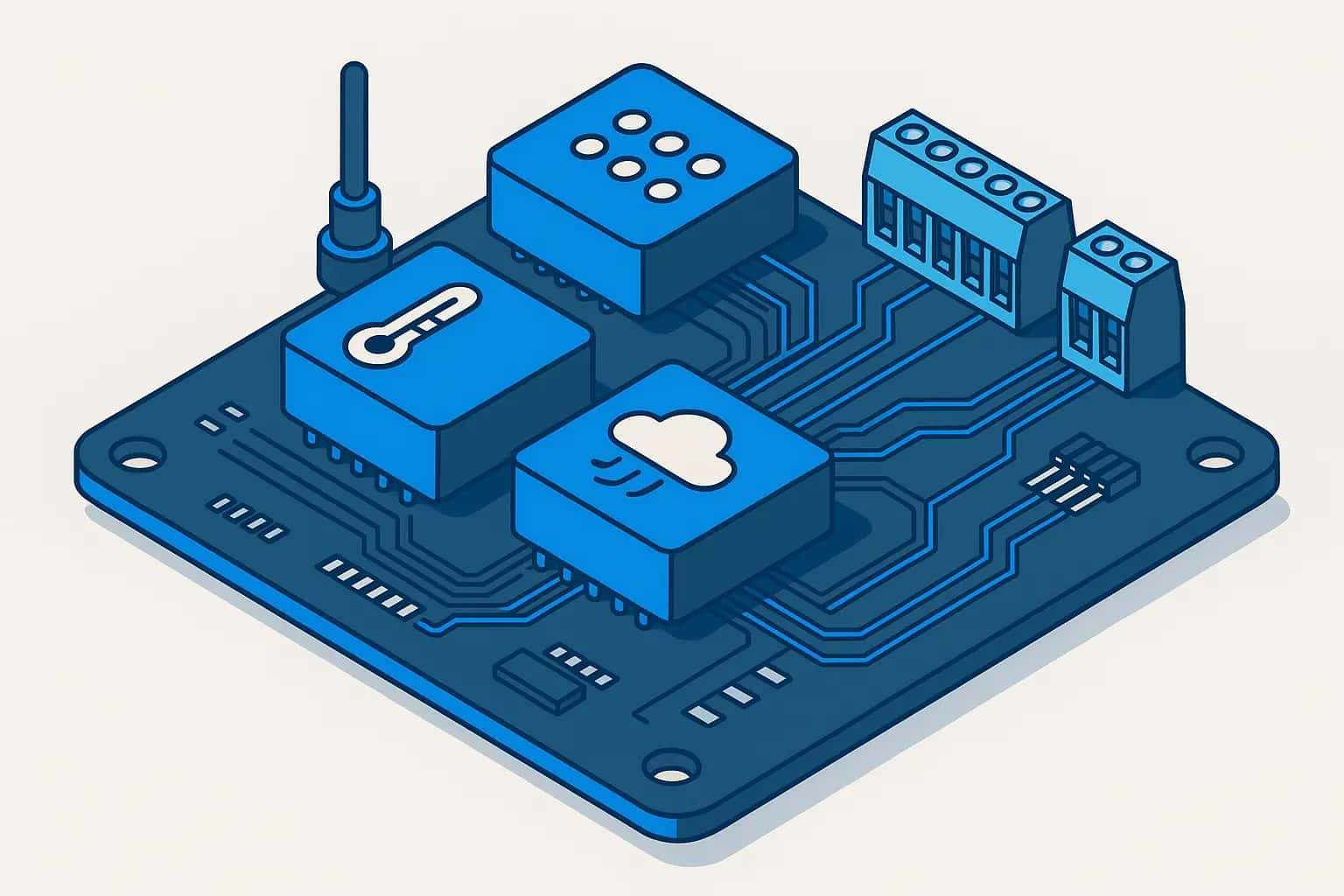
IoT and embedded system architectureSensor arrayMCU / SoCRTOSInferenceDevice management
Device
Sensor array and the embedded controller that reads it.
Edge intelligence
An RTOS and an inference layer deciding on-device.
Cloud services
Integration, device management and over-the-air update.

A sensor array feeds an edge controller running an RTOS and an inference layer. Connectivity carries data to cloud services, and a device-management path returns firmware and configuration over the air.

  1. Layer 1 of 3: Device. Sensor array and the embedded controller that reads it.
    • Sensor array — Concern deterministic control loops
    • MCU / SoC — Concern embedded firmware
    • Peripherals
  2. Layer 2 of 3: Edge intelligence. An RTOS and an inference layer deciding on-device.
    • RTOS — Concern edge inference latency
    • Inference — Validation medical-device controls
  3. Layer 3 of 3: Cloud services. Integration, device management and over-the-air update.
    • Connectivity
    • Device management — Path OTA update

Connections:

  • Sensor array reports readings to MCU / SoC.
  • MCU / SoC drives Peripherals.
  • MCU / SoC passes data up to RTOS.
  • RTOS schedules Inference.
  • Inference passes data up to Connectivity.
  • Connectivity carries telemetry to Device management.
  • Device management returns firmware and configuration to Inference.

CAPABILITIES

  • AI-powered controllers
  • Edge intelligence
  • Medical devices
  • Industrial automation
  • Smart infrastructure

KEY TECHNOLOGY

What the engineering turns on.

Smart sensor platforms
Sensing designed with the controller that reads it, so acquisition and control share one timing budget.
Edge inference
Inference on the device, because a decision that waits for a network is not a real-time decision.
Deterministic control loops
An RTOS scheduling work to a known worst case rather than an average one.
Backend software integration
Cloud services, device management and over-the-air update treated as part of the product, not as an afterwards.

SYSTEM ARCHITECTURE

The architecture, end to end.

Hover or tab to a node carrying a specification. Nodes without one are inert — the diagram does not promise detail the record cannot support.

IoT and embedded system architectureSensor arrayMCU / SoCRTOSInferenceDevice management
Device
Sensor array and the embedded controller that reads it.
Edge intelligence
An RTOS and an inference layer deciding on-device.
Cloud services
Integration, device management and over-the-air update.

A sensor array feeds an edge controller running an RTOS and an inference layer. Connectivity carries data to cloud services, and a device-management path returns firmware and configuration over the air.

  1. Layer 1 of 3: Device. Sensor array and the embedded controller that reads it.
    • Sensor array — Concern deterministic control loops
    • MCU / SoC — Concern embedded firmware
    • Peripherals
  2. Layer 2 of 3: Edge intelligence. An RTOS and an inference layer deciding on-device.
    • RTOS — Concern edge inference latency
    • Inference — Validation medical-device controls
  3. Layer 3 of 3: Cloud services. Integration, device management and over-the-air update.
    • Connectivity
    • Device management — Path OTA update

Connections:

  • Sensor array reports readings to MCU / SoC.
  • MCU / SoC drives Peripherals.
  • MCU / SoC passes data up to RTOS.
  • RTOS schedules Inference.
  • Inference passes data up to Connectivity.
  • Connectivity carries telemetry to Device management.
  • Device management returns firmware and configuration to Inference.
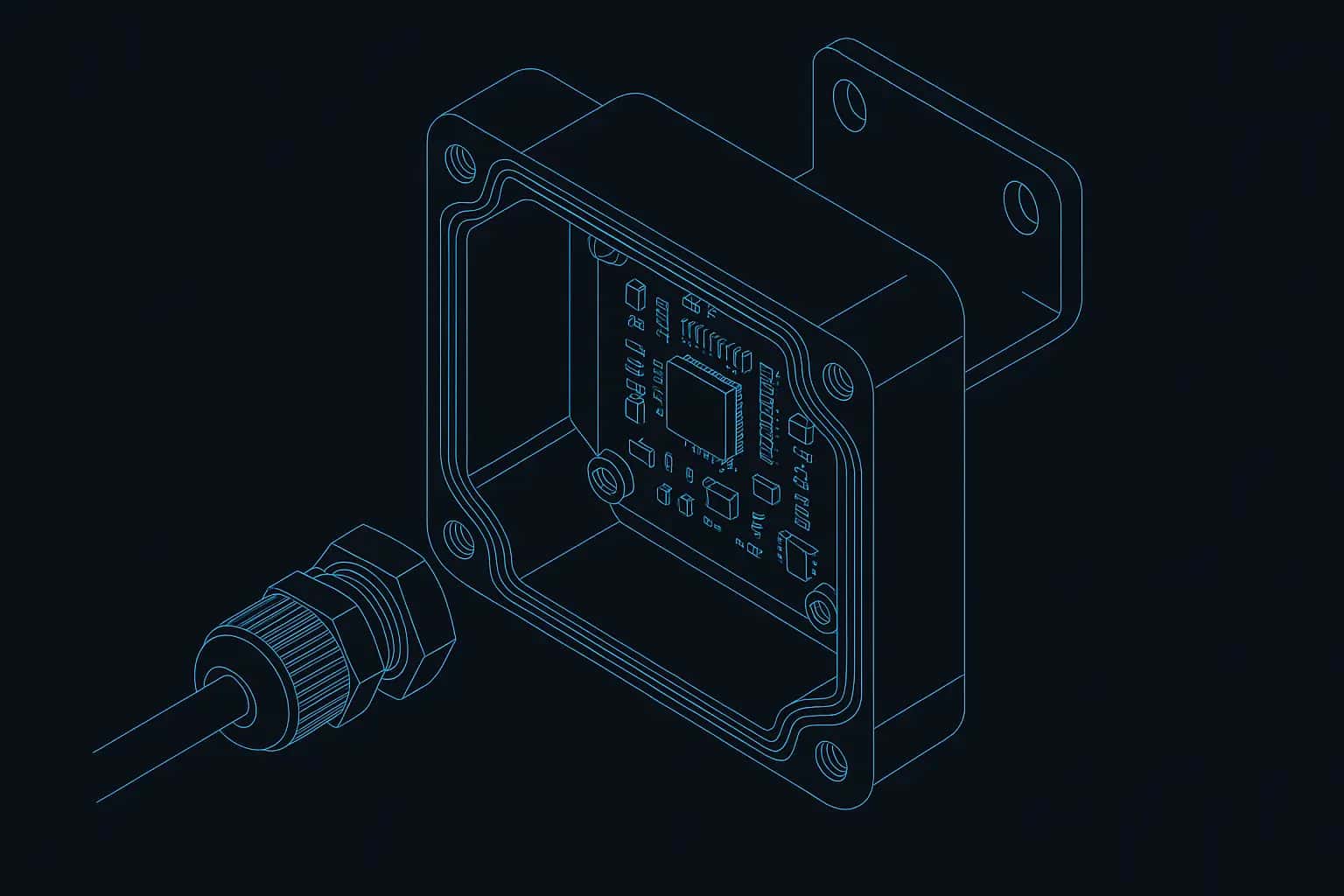
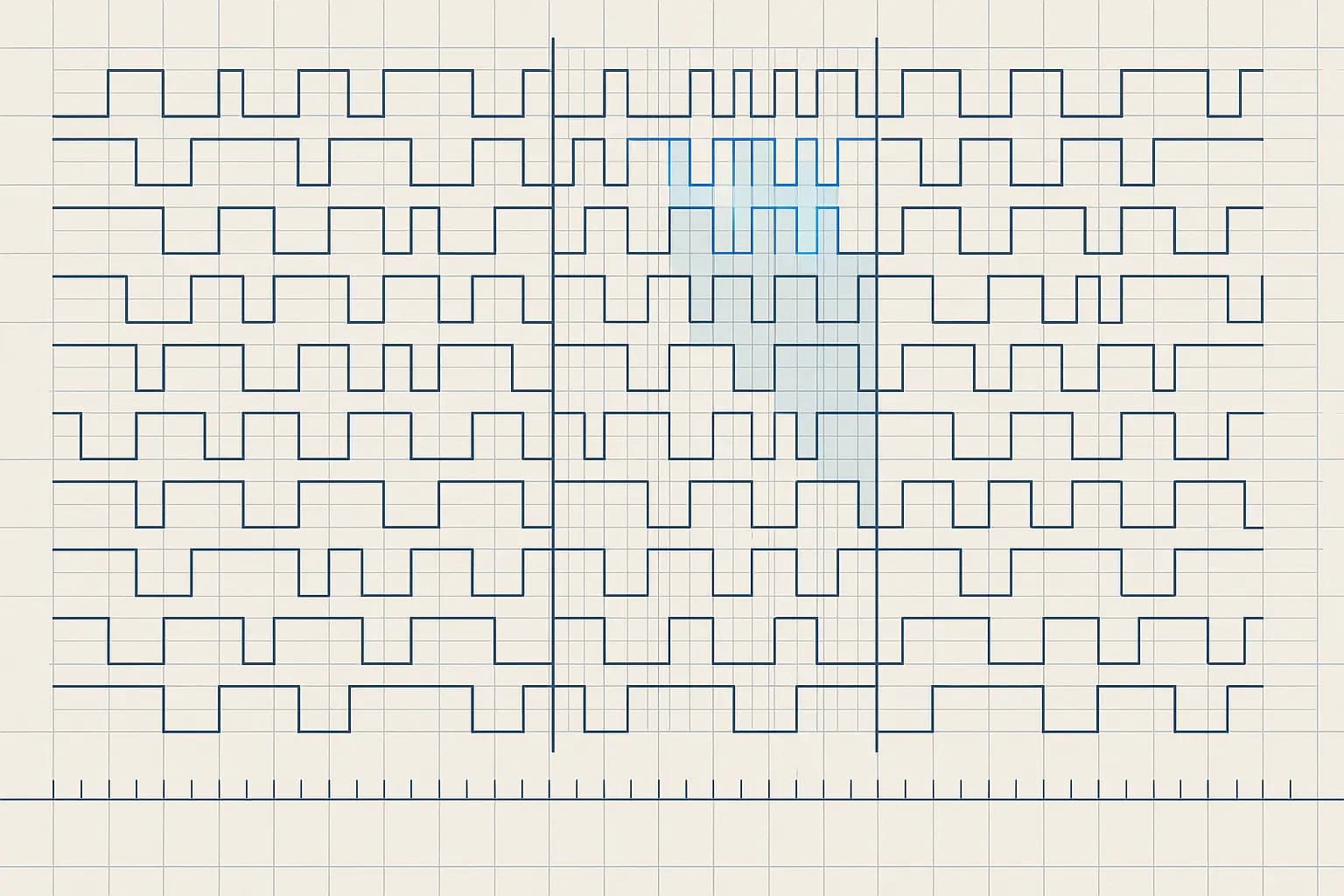
PLATE 01LOGIC-ANALYSER CAPTURE — PARALLEL CHANNELSILLUSTRATIVE

STANDARDS & INTERFACES

Embedded firmware
Firmware developed against the hardware it ships on, through verification.
Medical-device controls and validation
Design controls and validation evidence produced during development, which is the only point at which they can be produced honestly.
EMC and safety
The regimes behind the CE, FCC and UKCA marks for connected devices.

APPLICABLE MARKS

  • CEEuropean conformity — EU health, safety and environmental protection
  • ULUnderwriters Laboratories — North American product safety
  • FCCUS Federal Communications Commission — electromagnetic compatibility
  • UKCAUK Conformity Assessed — Great Britain market access

PROOF

Systems in this domain.

Medical device

IoT and AI medical capsule

Deployed in South Africa and the Middle East. Edge sensing feeds on-device inference, which reports to a clinician view when the link is available — the decision does not wait for connectivity.

Precision engineering, automation and medical support systems merged into one deployable unit, with the compliance dimension carried through development rather than retrofitted.

2024 · Display system

Advanced display solution

Commercial display new-product development through compliance, mass-production quality assurance, delivery and cost control.

Across healthcare, IoT, automotive and industrial use, displays are now interfaces for control rather than devices for output.

Bring the decision the device has to make.

What it has to decide, how fast, and what happens when the link is down. An architecture that answers those is a different design from one that assumes connectivity.

The other domain: New Energy & EV Infrastructure

REV 2026.1