
Reliability at scale is a different problem from reliability.
Infrastructure systems are maintained by people who did not build them, in places nobody visits often. That shapes the architecture more than the feature set does.
WHAT THE WORK TURNS ON
- Smart grids
- Distributed generation and storage as part of the network, not attached to it.
- Connected systems
- Devices that stay serviceable through a decade of firmware and personnel changes.
- Scale and reliability
- Failure modes that are acceptable once and unacceptable ten thousand times.
ARCHITECTURE
The architecture this sector draws on. It is the same system TrustXP builds in the corresponding domain — the sector changes what matters in it, not what it is.
EV charging system architecture
- Power path
- Grid connection through conversion to the vehicle connector.
- Control and telemetry
- Charge control and the reporting link to cloud services.
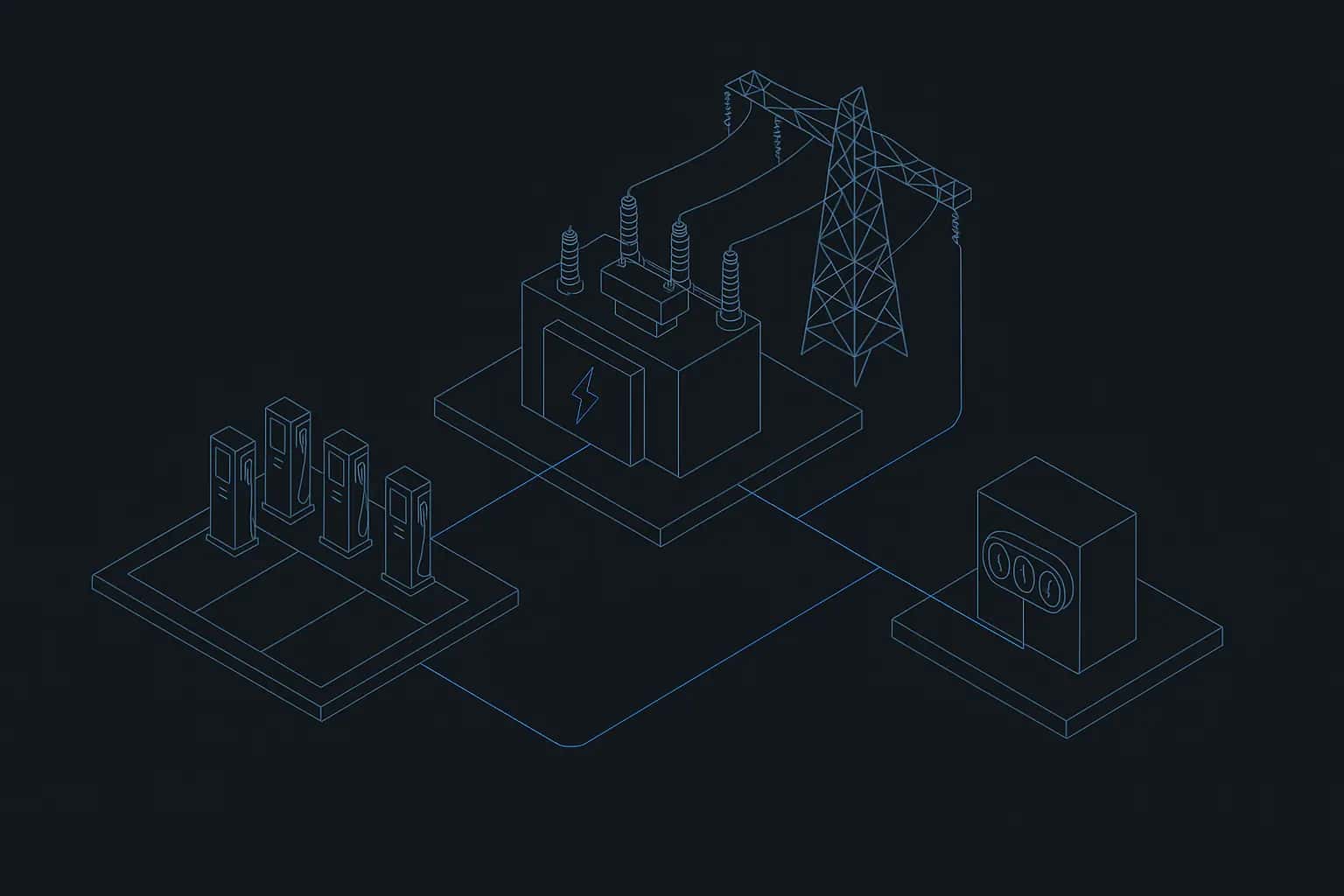
Grid connection feeds power conversion, which feeds the charge controller and the connector. Energy storage and solar sit on a parallel path into the same conversion stage, and a telemetry link reports to the cloud layer.
- Layer 1 of 2: Power path. Grid connection through conversion to the vehicle connector.
- Grid connection — Concern grid integration
- Power conversion — Concern high-voltage power electronics
- Energy storage — Concern thermal design and derating
- Solar input
- Connector — Standard safety standards
- Layer 2 of 2: Control and telemetry. Charge control and the reporting link to cloud services.
- Charge controller — Interface OCPP
- Telemetry
Connections:
- Grid connection supplies grid power to Power conversion.
- Power conversion delivers DC output to Connector.
- Energy storage discharges into Power conversion.
- Solar input charges Energy storage.
- Power conversion passes data up to Charge controller.
- Charge controller passes data up to Telemetry.
- Charge controller returns firmware and setpoints to Connector.