
Architecture and how it works.
Interfaces, data paths and deployment topology. This page is denser than the rest of the site on purpose.
THE ENGINEENGINE-01
- Physical edge
- Rugged sensors and edge processors that survive heat, dust and vibration.
- Intelligence core
- A real-time AI + RTOS layer making zero-latency decisions at the edge.
- Digital cloud
- Scalable analytics and model training that feed evolved models back to the edge.
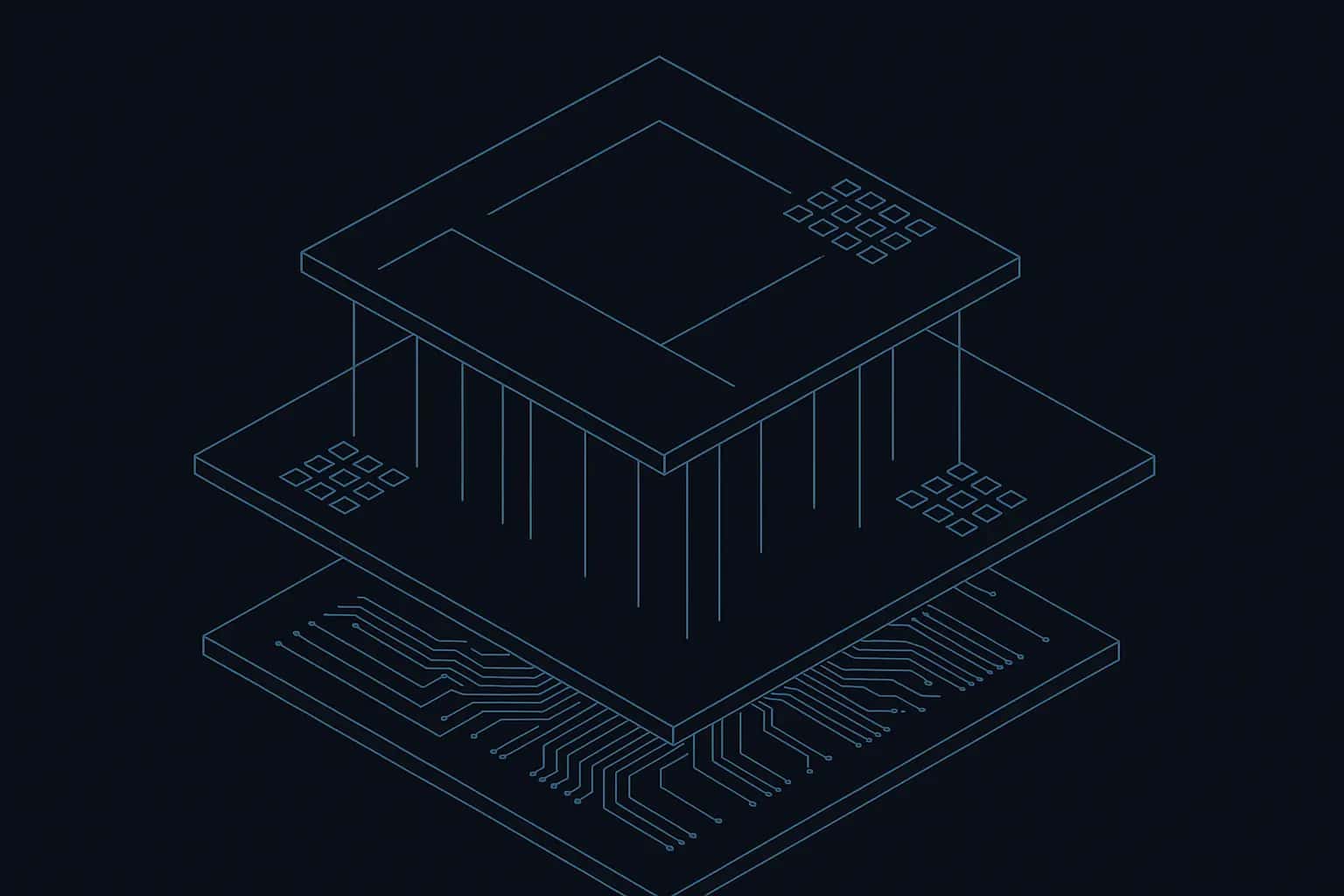
Three stacked layers. A physical edge of rugged sensors and edge processors; an intelligence core running real-time AI and an RTOS; and a digital cloud for analytics and model training. Data rises from the edge to the cloud, and trained models return to the edge, closing the loop.
- Layer 1 of 3: Physical edge. Rugged sensors and edge processors that survive heat, dust and vibration.
- Sensor array — Environment heat, dust, vibration
- Power stage
- Edge processor — Role acquisition and control
- I/O
- Actuator
- Layer 2 of 3: Intelligence core. A real-time AI + RTOS layer making zero-latency decisions at the edge.
- RTOS — Scheduling deterministic
- Inference — Decision point at the edge
- Control loop
- Layer 3 of 3: Digital cloud. Scalable analytics and model training that feed evolved models back to the edge.
- Analytics
- Model training — Output evolved models to the edge
- Fleet management
Connections:
- Sensor array delivers measurements to Edge processor.
- Edge processor issues actuation commands to I/O.
- Power stage delivers drive current to Actuator.
- Edge processor passes data up to RTOS.
- RTOS schedules Inference.
- Inference supplies setpoints to Control loop.
- Inference passes data up to Analytics.
- Analytics supplies datasets to Model training.
- Control loop passes data up to Fleet management.
- Model training returns trained models to Inference.
- Fleet management returns updated operating policy to Control loop.
LAYER INTERFACES
What crosses each boundary.
| Interface | Carries |
|---|---|
| Sensing to edge processorphysical | acquisition |
| Edge processor to RTOSupward | scheduled work |
| RTOS to inferencein-layer | control |
| Inference to analyticsupward | data |
| Training to inferencereturn | evolved models |
| Fleet management to control loopreturn | configuration |
Layer interfaces and what crosses them
- Sensing to edge processorphysical
- acquisition
- Edge processor to RTOSupward
- scheduled work
- RTOS to inferencein-layer
- control
- Inference to analyticsupward
- data
- Training to inferencereturn
- evolved models
- Fleet management to control loopreturn
- configuration
DATA PATHS
Where each decision is made.
The topology question is not where data goes but where decisions happen. These are the answers the architecture fixes.
| Decision | Location |
|---|---|
| Real-time control decision | on device |
| Model training | cloud |
| Model execution | on device |
| Fleet aggregation | cloud |
| Behaviour when the link is down | unchanged at the edge |
Where each class of decision is made
- Real-time control decision
- on device
- Model training
- cloud
- Model execution
- on device
- Fleet aggregation
- cloud
- Behaviour when the link is down
- unchanged at the edge
DEPLOYMENT TOPOLOGY
- Edge-only
- The device operates with no cloud dependency at all. Everything the system decides, it decides locally; the cloud layer is absent rather than unreachable.
- Edge with reporting
- Control stays local, telemetry rises when a link exists. Losing the link degrades visibility, not function — which is the distinction that matters in the field.
- Closed loop
- Reporting plus the return path: models trained on fleet data are deployed back to devices. This is the only topology in which the installed base improves after shipping.
INTEGRATION
Meeting systems that already exist.
Most programmes are not greenfield. The engine is specified so that each layer can be adopted without the others.
- Existing controllers
- The engine can sit beside a customer's controller rather than replacing it, taking sensing and inference while the incumbent keeps actuation.
- Existing cloud
- The cloud layer is a role, not a vendor. Where a customer already has a platform, the return path targets theirs.
- Existing certification
- Where a product is already certified, changes are scoped against what would force re-certification — a constraint that belongs at architecture, not at the end.
Bring the constraints, not the wish list.
The useful first conversation about an architecture is about what it has to survive, what it has to interoperate with, and what cannot change.
REV 2026.1SHEET 2 OF 2