TRUSTXP · GLOBAL INTELLIGENT INFRASTRUCTURE ENGINEERINGGLOBAL INFRASTRUCTURE ENGINEERING · SHANGHAI
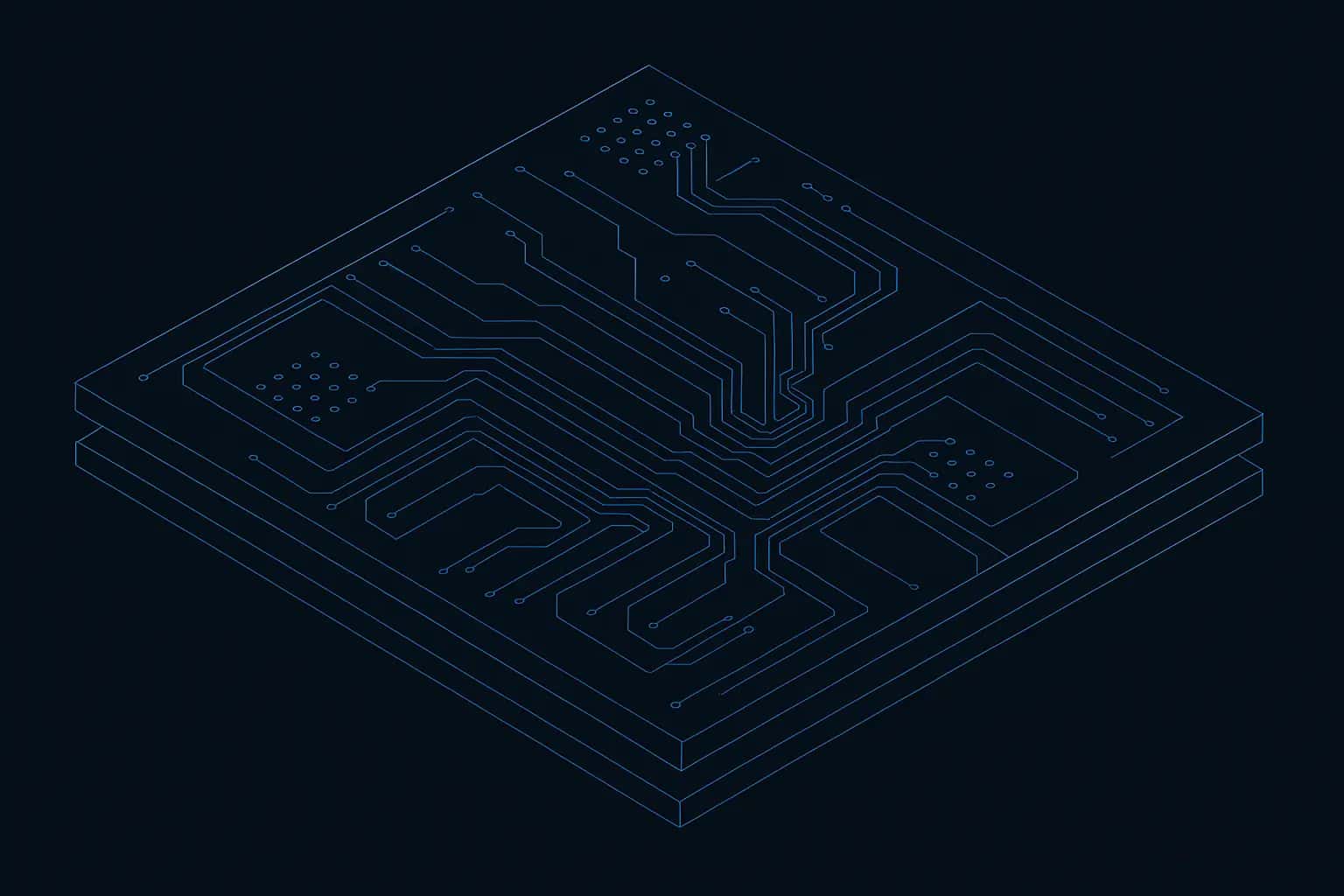
The TrustXP Intelligence Engine — a unified three-layer architecture
Physical edge
Rugged sensors and edge processors that survive heat, dust and vibration.
Intelligence core
A real-time AI + RTOS layer making zero-latency decisions at the edge.
Digital cloud
Scalable analytics and model training that feed evolved models back to the edge.
Three stacked layers. A physical edge of rugged sensors and edge processors; an intelligence core running real-time AI and an RTOS; and a digital cloud for analytics and model training. Data rises from the edge to the cloud, and trained models return to the edge, closing the loop.
Layer 1 of 3: Physical edge. Rugged sensors and edge processors that survive heat, dust and vibration.
Sensor array — Environment heat, dust, vibration
Power stage
Edge processor — Role acquisition and control
I/O
Actuator
Layer 2 of 3: Intelligence core. A real-time AI + RTOS layer making zero-latency decisions at the edge.
RTOS — Scheduling deterministic
Inference — Decision point at the edge
Control loop
Layer 3 of 3: Digital cloud. Scalable analytics and model training that feed evolved models back to the edge.
Analytics
Model training — Output evolved models to the edge
Fleet management
Connections:
Sensor array delivers measurements to Edge processor.
Edge processor issues actuation commands to I/O.
Power stage delivers drive current to Actuator.
Edge processor passes data up to RTOS.
RTOS schedules Inference.
Inference supplies setpoints to Control loop.
Inference passes data up to Analytics.
Analytics supplies datasets to Model training.
Control loop passes data up to Fleet management.
Model training returns trained models to Inference.
Fleet management returns updated operating policy to Control loop.
Engineering the systems powering tomorrow’s infrastructure.
TrustXP architects, integrates and industrialises systems across new energy and EV infrastructure, and IoT, embedded and intelligent automation.
The subject changes; the discipline does not. Both domains are architected, integrated and taken to volume by the same team, under the same lifecycle.
DOMAIN 01
New Energy & EV Infrastructure
Charging systems, energy storage, power electronics, grid integration, and hydrogen and renewable platforms — specified, integrated and taken to volume.
Grid connection through conversion to the vehicle connector.
Control and telemetry
Charge control and the reporting link to cloud services.
Grid connection feeds power conversion, which feeds the charge controller and the connector. Energy storage and solar sit on a parallel path into the same conversion stage, and a telemetry link reports to the cloud layer.
Layer 1 of 2: Power path. Grid connection through conversion to the vehicle connector.
Grid connection — Concern grid integration
Power conversion — Concern high-voltage power electronics
Energy storage — Concern thermal design and derating
Solar input
Connector — Standard safety standards
Layer 2 of 2: Control and telemetry. Charge control and the reporting link to cloud services.
Charge controller — Interface OCPP
Telemetry
Connections:
Grid connection supplies grid power to Power conversion.
Power conversion delivers DC output to Connector.
Energy storage discharges into Power conversion.
Solar input charges Energy storage.
Power conversion passes data up to Charge controller.
Charge controller passes data up to Telemetry.
Charge controller returns firmware and setpoints to Connector.
DOMAIN 02
IoT, Embedded & Intelligent Automation
Edge intelligence, embedded controllers, medical devices, industrial automation and smart infrastructure — where the decision has to happen on the device.
Sensor array and the embedded controller that reads it.
Edge intelligence
An RTOS and an inference layer deciding on-device.
Cloud services
Integration, device management and over-the-air update.
A sensor array feeds an edge controller running an RTOS and an inference layer. Connectivity carries data to cloud services, and a device-management path returns firmware and configuration over the air.
Layer 1 of 3: Device. Sensor array and the embedded controller that reads it.
Sensor array — Concern deterministic control loops
MCU / SoC — Concern embedded firmware
Peripherals
Layer 2 of 3: Edge intelligence. An RTOS and an inference layer deciding on-device.
RTOS — Concern edge inference latency
Inference — Validation medical-device controls
Layer 3 of 3: Cloud services. Integration, device management and over-the-air update.
Connectivity
Device management — Path OTA update
Connections:
Sensor array reports readings to MCU / SoC.
MCU / SoC drives Peripherals.
MCU / SoC passes data up to RTOS.
RTOS schedules Inference.
Inference passes data up to Connectivity.
Connectivity carries telemetry to Device management.
Device management returns firmware and configuration to Inference.
THE INTELLIGENCE ENGINE · ENGINE-01
Your System. Our Intelligence.
From engineering to ecosystem: intelligence is designed into the architecture, not added to it afterwards.
The TrustXP Intelligence Engine — a unified three-layer architecture
Physical edge
Rugged sensors and edge processors that survive heat, dust and vibration.
Intelligence core
A real-time AI + RTOS layer making zero-latency decisions at the edge.
Digital cloud
Scalable analytics and model training that feed evolved models back to the edge.
Three stacked layers. A physical edge of rugged sensors and edge processors; an intelligence core running real-time AI and an RTOS; and a digital cloud for analytics and model training. Data rises from the edge to the cloud, and trained models return to the edge, closing the loop.
Layer 1 of 3: Physical edge. Rugged sensors and edge processors that survive heat, dust and vibration.
Sensor array — Environment heat, dust, vibration
Power stage
Edge processor — Role acquisition and control
I/O
Actuator
Layer 2 of 3: Intelligence core. A real-time AI + RTOS layer making zero-latency decisions at the edge.
RTOS — Scheduling deterministic
Inference — Decision point at the edge
Control loop
Layer 3 of 3: Digital cloud. Scalable analytics and model training that feed evolved models back to the edge.
Analytics
Model training — Output evolved models to the edge
Fleet management
Connections:
Sensor array delivers measurements to Edge processor.
Edge processor issues actuation commands to I/O.
Power stage delivers drive current to Actuator.
Edge processor passes data up to RTOS.
RTOS schedules Inference.
Inference supplies setpoints to Control loop.
Inference passes data up to Analytics.
Analytics supplies datasets to Model training.
Control loop passes data up to Fleet management.
Model training returns trained models to Inference.
Fleet management returns updated operating policy to Control loop.
—IoT and AI medical capsuleIoT & embedded · Medical device›
CHALLENGE
Deliver diagnostic capability into settings where a clinician and a reliable network cannot be assumed, across deployments in South Africa and the Middle East.
SYSTEM ARCHITECTURE
Sensing at the edge, inference on the device rather than in the cloud, and a clinician view fed by the link when it is available. The decision does not wait for connectivity.
OUTCOME
Precision engineering, automation and medical support systems merged into one deployable unit — accessible, intelligent healthcare delivered as a system rather than as a device.
IoT and AI medical capsule — system architecture
System
Cloud
Edge sensing feeds on-device inference, which reports to a clinician cloud view.
Layer 1 of 2: System
Edge sensing
On-device inference — Detail decision at the edge
Clinician link
Layer 2 of 2: Cloud
Clinician view
Connections:
Edge sensing connects to On-device inference.
On-device inference connects to Clinician link.
Clinician link connects to Clinician view.
—High-power EV charging with integrated battery storageNew energy & EV · Charging system›
High-power charging with storage integrated into the same architecture rather than bolted alongside it — one-stop development covering new-energy-vehicle charging, solar energy storage and charging stations.
ODM and OEM service for international clients, with the certification set applicable to energy products carried through the programme.
Commercial display new-product development through compliance, mass-production quality assurance, delivery and cost control.
The arc from CRT to LCD to OLED to MicroLED is a change in what a display is for: across healthcare, IoT, automotive and industrial use, displays are now interfaces for control rather than devices for output.
2023Data centre hardware contract manufacturingIndustrial · PCBA›
PCBA quick-turn development alongside mass-production quality assurance, delivery and cost control — the gate sequence from prototype to volume run as one programme.
Verification and validation testing sit inside the lifecycle, before certification rather than after it. Six marks apply across the product classes TrustXP delivers.
CCCChina Compulsory Certification — mandatory for the Chinese market
CEEuropean conformity — EU health, safety and environmental protection
ULUnderwriters Laboratories — North American product safety
FCCUS Federal Communications Commission — electromagnetic compatibility
UKCAUK Conformity Assessed — Great Britain market access
Energy StarUS EPA energy-efficiency programme
DELIVERY NETWORK
Ten strategic locations. Five countries. One integrated delivery network.
China06 SITES
ShanghaiHQHeadquarters
Hong KongCorporation
SuzhouContract manufacturing
ShenzhenContract manufacturing
ChongqingContract manufacturing
HangzhouAutomation manufacturing
Vietnam01 SITE
Bắc NinhContract manufacturing
Indonesia01 SITE
BatamManufacturing and team
India01 SITE
BangaloreEngineering talent
Nigeria01 SITE
LagosTechnology and IT
10 STRATEGIC LOCATIONS · 5 COUNTRIES · ONE INTEGRATED DELIVERY NETWORK
OPEN A CHANNEL
Bring us the system, not the specification.
The most useful first conversation is about what the system has to do and the conditions it has to survive. The specification follows from that.